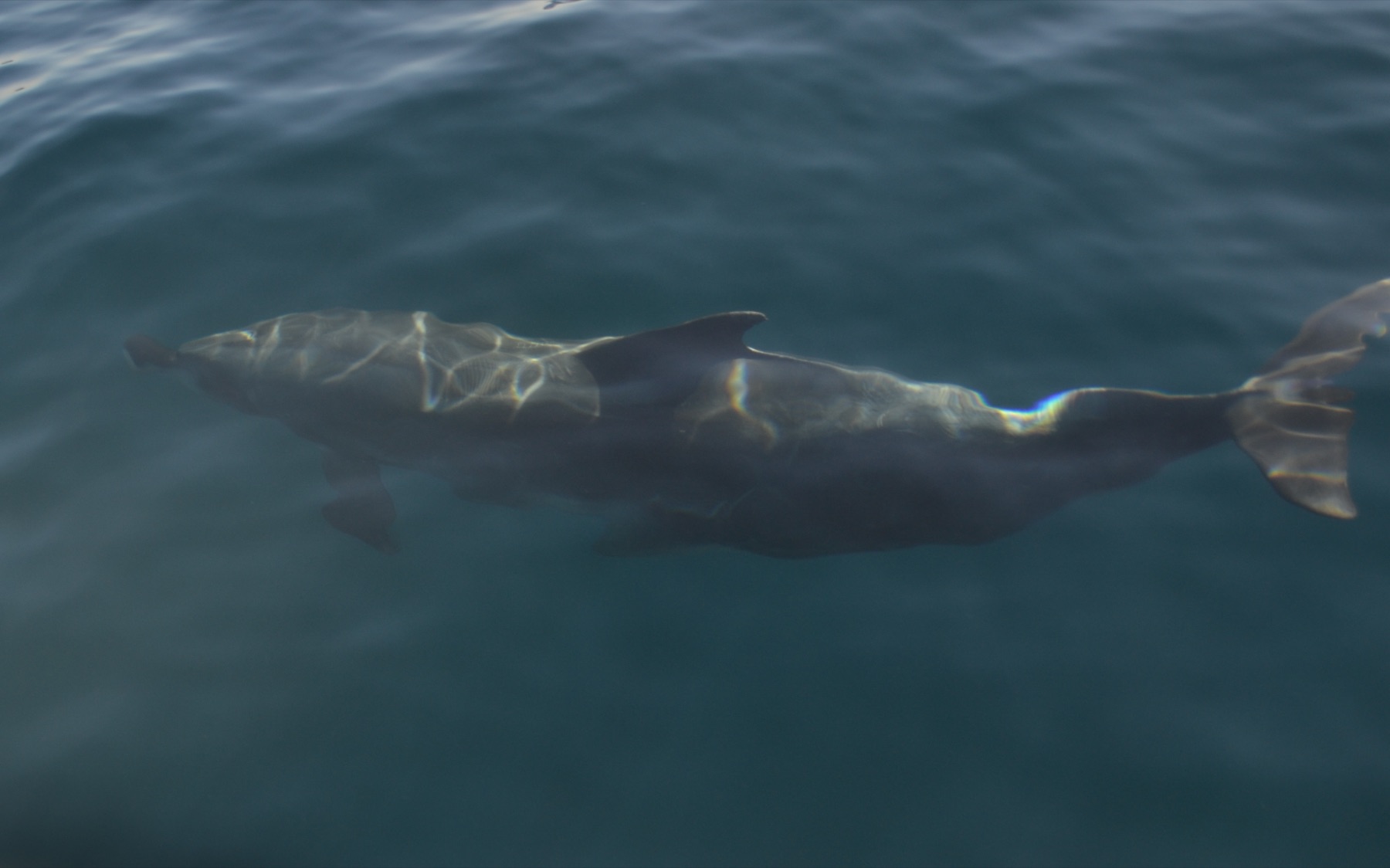
Bottlenose dolphin
Tursiops truncatus
SoCal bottlenose live year-round in small resident pods of 10–30 animals and are regulars inside Newport Harbor and Malibu Lagoon. They use a learned technique called strand feeding — chasing fish onto shallow sand margins — and individual dolphins here have been photo-ID catalogued for decades.
About 1.7× as long as an average adult is tall.
A bottlenose dolphin runs about 9.5 ft. Drawn beside an average adult human — 5.7 ft standing, the CDC's own U.S. adult average.
Average adult human: 5.7 ft (5 ft 7 in), CDC NHANES U.S. adult average standing height.
Drawn to the same scale. 9.5 ÷ 5.7 ≈ 1.7.
California coastal bottlenose dolphins have been individually photo-catalogued since the 1980s, and for two decades the count barely moved — abundance estimates of 354 (1987–89), 356 (1996–98), and 323 (2004–05). Then 2009–2011 surveys turned up 450 to 515 animals, the highest ever recorded, three-quarters of them dolphins nobody had catalogued before. NOAA's own read: the jump could be real population growth, or dolphins moving north out of Mexican waters — the data can't yet tell the two apart.NOAA California Coastal Bottlenose Dolphin SAR, rev. 2/9/2017 (in the 2023 Pacific SARs) source →
California coastal stock abundance estimates: essentially flat at 323–356 across three survey periods from 1987 to 2005, then a jump to 453 (the best mark-recapture estimate; a second model put it as high as 515) in 2009–2011 — three-quarters of those dolphins had never been catalogued before.
NOAA's own assessment: the jump in catalogued animals may reflect real population growth, or dolphins moving north from Mexican waters — the data can't yet separate the two.
At a glance
Length/weight/lifespan/diet: NOAA Fisheries species page →
California coastal bottlenose dolphins have been individually photo-catalogued since the 1980s, and for two decades the count barely moved — abundance estimates of 354 (1987–89), 356 (1996–98), and 323 (2004–05). Then 2009–2011 surveys turned up 450 to 515 animals, the highest ever recorded, three-quarters of them dolphins nobody had catalogued before. NOAA's own read: the jump could be real population growth, or dolphins moving north out of Mexican waters — the data can't yet tell the two apart.
NOAA California Coastal Bottlenose Dolphin SAR, rev. 2/9/2017 (in the 2023 Pacific SARs) source →
HOW RARITY IS JUDGED →What to look for
Best months to see
Last 30 days
This chart includes numerical reports only. Uncounted sightings do not appear in its totals; see the daily archive for presence reports.
Where to go (operators publish dated sighting reports)
We monitor public trip reports across Newport Beach, Long Beach, Dana Point and San Diego. Reporting schedules vary; summaries show the latest available report. Newport's shared feed is counted once.